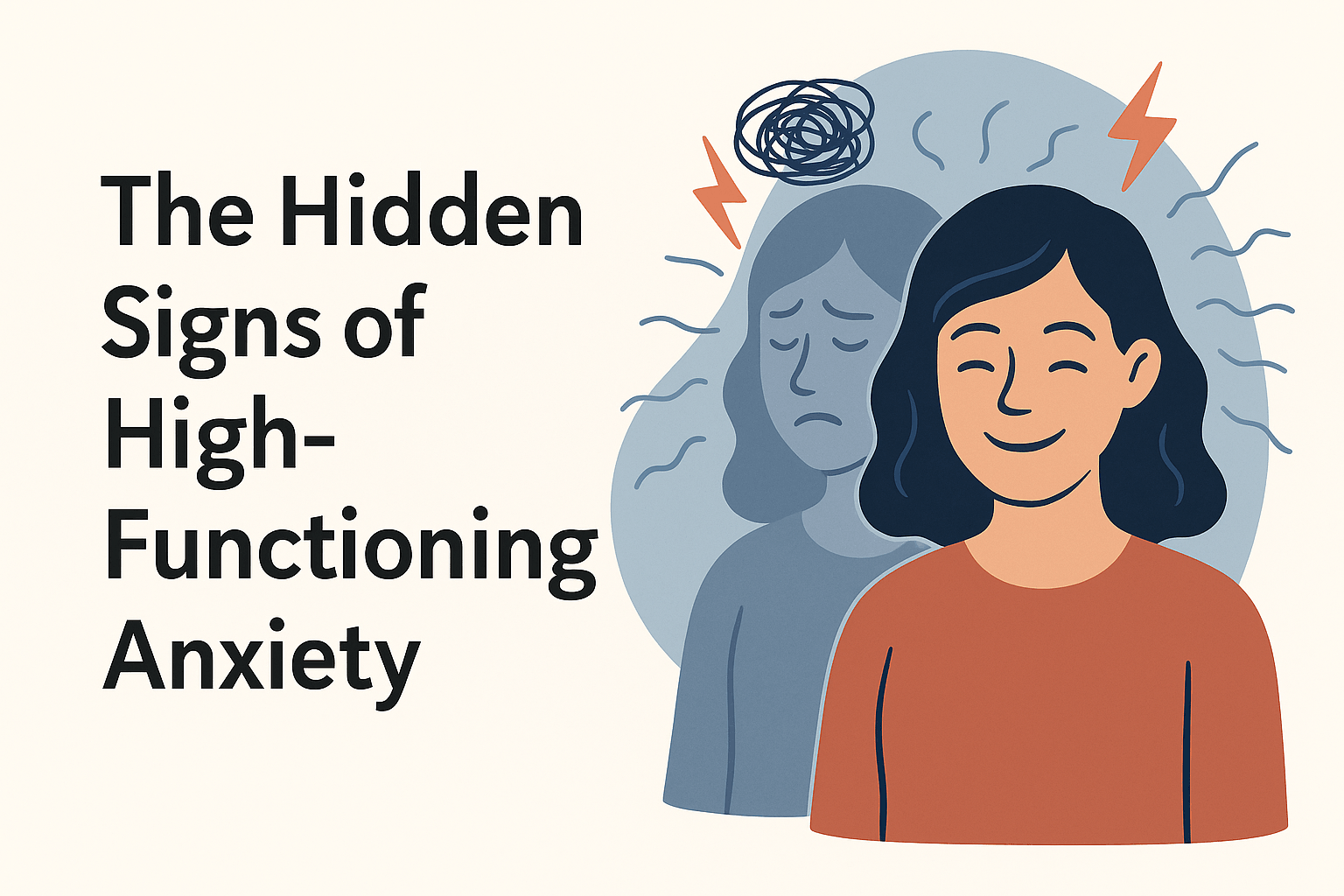
The Hidden Signs of High Functioning Anxiety
High functioning anxiety can be one of the hardest emotional experiences to identify because it doesn’t always look like anxiety from the outside. People who live with it often appear organised, reliable, sociable or successful. They meet deadlines, show up for others and keep everything running smoothly. But under the surface, there may be a mix of worry, tension, pressure and self doubt that never really switches off.
Many people with high functioning anxiety don’t reach out for support because they believe their struggles aren’t “serious enough.” They assume that because they’re coping. They must be fine. But coping well doesn’t mean you’re not suffering internally. This guide explains why high functioning anxiety is easy to miss and what it truly feels like.
What Makes High Functioning Anxiety Different
Typical anxiety is easier to recognise because symptoms interfere with daily life. But with high functioning anxiety, the symptoms often fuel productivity. Worry drives preparation. Fear of mistakes drives hard work. Restlessness drives achievement.
It becomes a cycle where your strengths hide your anxiety.
People may say:
“You always seem so organised.”
“You’re the person who holds everything together.”
“You seem confident.”
Meanwhile, inside, it might feel like:
“If I stop, everything will fall apart.”
“I can’t afford to make a mistake.”
“What if I let someone down?”
This mismatch between appearance and experience is what makes high functioning anxiety so invisible.
Common Hidden Signs of High Functioning Anxiety
These signs often go unnoticed or get mistaken for personality traits.
1. Constant Internal Pressure
There’s a sense that you must always be doing more or doing better. Even when you complete tasks, the pressure doesn’t lift. Rest can feel unfamiliar or uncomfortable.
People may describe this as:
-
never feeling “caught up”
-
pushing through exhaustion
-
expecting too much of themselves
This internal pressure often begins early in life and becomes automatic.
2. Overworking or Overpreparing
Preparation becomes a way of managing fear. You might check things repeatedly, plan far ahead or take on more responsibility than necessary.
This can look like:
-
rewriting emails multiple times
-
rehearsing conversations in advance
-
always turning up early
-
working late to avoid mistakes
Although it may lead to success, it also leads to burnout.
3. Difficulty Relaxing or Switching Off
Rest can feel strange or unsafe. When you finally stop, your mind may race even more because there’s no distraction from your thoughts.
Common patterns include:
-
feeling guilty for relaxing
-
needing to stay busy
-
filling free time with tasks
-
struggling to be present
Relaxation becomes something you have to “earn,” rather than something you deserve.
4. People Pleasing and Avoiding Conflict
People with high functioning anxiety often care deeply about others’ feelings. They may try to keep the peace or prevent disappointment.
This can lead to:
-
taking responsibility for others’ emotions
-
avoiding saying no
-
over explaining or apologising
-
assuming blame even when they’re not at fault
The fear of conflict can be rooted in past experiences or attachment patterns.
5. Hidden Physical Symptoms
Even when you appear calm, the body may show signs of stress:
-
tension in the shoulders or jaw
-
headaches
-
shallow breathing
-
digestive discomfort
-
racing thoughts at night
-
trouble sleeping
These symptoms often get dismissed as “normal” or “stress,” but they’re strong indicators of anxiety.
Why High Functioning Anxiety is Easy to Miss
High functioning anxiety hides behind competence. Because your life doesn’t fall apart on the outside, others assume you’re okay. You may assume the same.
People with high functioning anxiety are often:
-
reliable
-
kind
-
hardworking
-
emotionally aware
-
organised
-
capable under pressure
These qualities mask distress. You may feel that asking for help isn’t justified because everything looks “fine.”
However, anxiety doesn’t need to disrupt your life to deserve support. Inner pressure, self criticism, and emotional exhaustion are valid on their own.
The Impact of High Functioning Anxiety Over Time
If left unaddressed, high functioning anxiety can build over years. You may experience:
-
burnout
-
irritability
-
emotional fatigue
-
difficulty making decisions
-
overthinking
-
disconnection from yourself
-
reduced joy or fulfilment
Your mind becomes used to operating at high alert, and it may feel impossible to relax without feeling guilty.
How Therapy Helps High Functioning Anxiety
Therapy creates space away from expectations and external roles. It allows you to explore what’s happening beneath the surface.
In therapy, you can:
1. Understand the origin of your internal pressure
High functioning anxiety often develops from past experiences where being capable felt like a requirement.
2. Explore the beliefs that keep you in the cycle
Thoughts like “I must not fail” or “I have to be strong” can be gently unpacked.
3. Build emotional awareness
You learn to recognise your needs rather than pushing through them.
4. Develop healthier boundaries
Saying no becomes possible without guilt.
5. Learn to relax without fear
Therapy helps your nervous system feel safe again.
High functioning anxiety is treatable. You don’t have to reach a breaking point before reaching out.
Conclusion
High functioning anxiety may not disrupt your external world, but it can create a deep internal struggle. If you recognise yourself in these signs, it’s okay to seek support. You deserve to feel calm, grounded and able to rest.
Related reading
More from the blog
Need Support?
If you're ready to take the next step, we're here to help