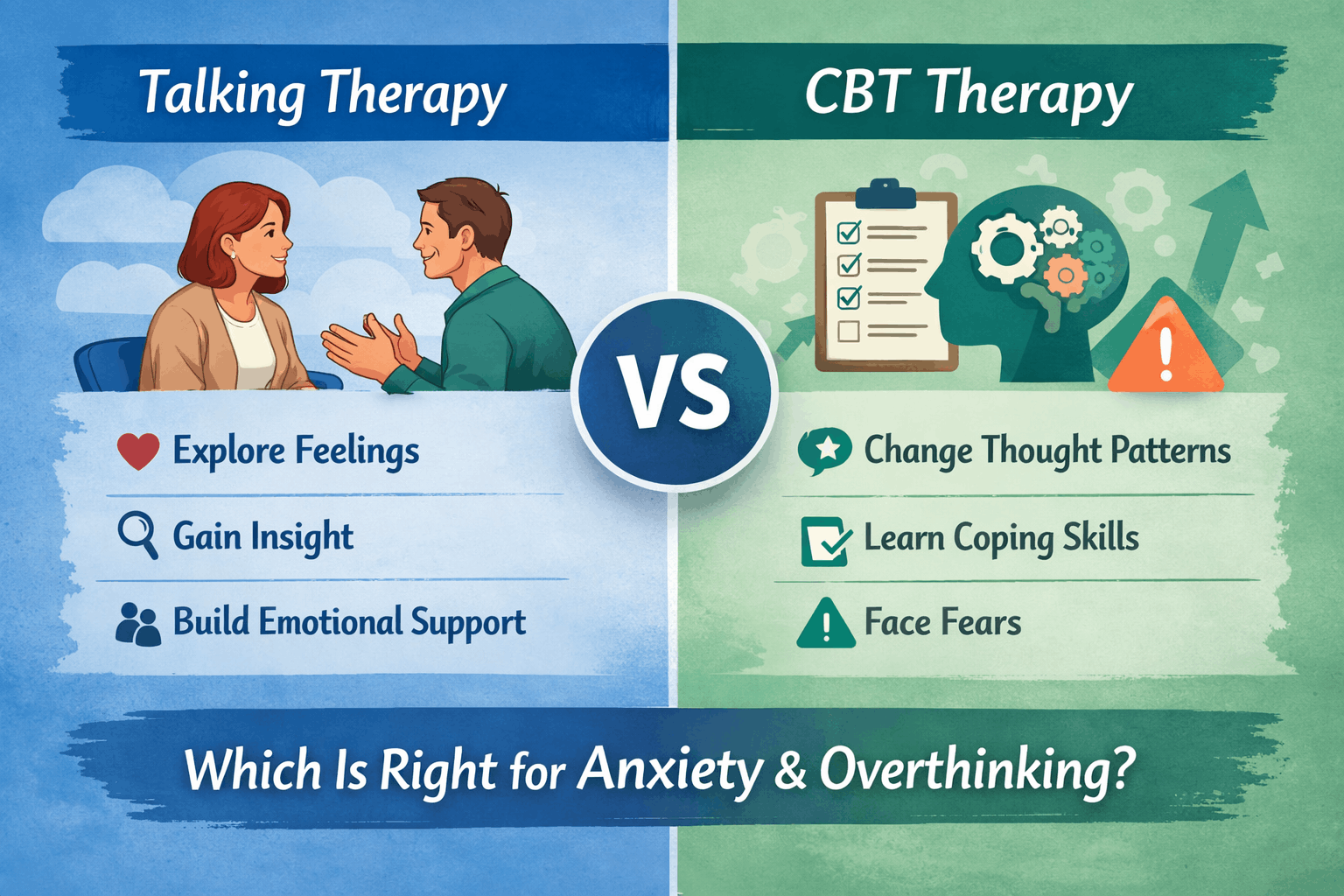
Talking Therapy vs CBT: Which Is Right for Anxiety and Overthinking?
If you’re struggling with anxiety or overthinking, you may already have come across Cognitive Behavioural Therapy (CBT). It’s often recommended by GPs, widely talked about online, and frequently described as the “go-to” therapy for anxiety.
At the same time, many people feel drawn to talking therapy — a space to speak openly, explore emotions, and make sense of patterns in their life — but wonder whether it will actually help with anxiety.
So which is better?
And how do you know which approach is right for you?
The short answer is: it depends on what you’re struggling with and how you experience anxiety. This article explores the differences in a clear, non-technical way, so you can make a more informed choice.
What Is CBT?
CBT is a structured, goal-focused therapy that looks at the relationship between your thoughts, feelings, physical sensations, and behaviours.
The core idea is that:
-
Certain thinking patterns can fuel anxiety
-
Behavioural habits (like avoidance or reassurance-seeking) can keep it going
-
Changing these patterns can reduce symptoms
CBT often involves:
-
Identifying unhelpful thoughts
-
Learning ways to challenge or reframe them
-
Gradually facing feared situations
-
Practising techniques between sessions
Many people find CBT helpful, particularly for specific anxiety patterns such as panic, phobias, or obsessive thinking.
What Is Talking Therapy?
Talking therapy (often person-centred or relational) focuses less on techniques and more on understanding your internal experience.
Rather than trying to change thoughts directly, it offers a space to:
-
Explore emotions safely
-
Understand where anxiety may have come from
-
Notice recurring patterns in relationships or self-belief
-
Develop self-awareness and emotional resilience
The relationship between client and therapist is central. Feeling heard, understood, and accepted is not a side benefit — it’s part of how change happens.
For many people, anxiety isn’t just about thoughts going wrong, but about how they relate to themselves and others.
How CBT Can Help with Anxiety and Overthinking
CBT can be particularly effective when:
-
Anxiety feels intense and specific
-
You get stuck in repetitive thought loops
-
You want practical tools you can apply day to day
-
You like structure and clear goals
It often helps people:
-
Interrupt rumination and overthinking
-
Reduce avoidance behaviours
-
Feel more in control of anxious symptoms
However, some people find CBT challenging if:
-
They feel emotionally disconnected or numb
-
Anxiety feels rooted in deeper life experiences
-
Techniques feel effortful or self-critical
-
They already “understand” their thoughts but still feel stuck
This doesn’t mean CBT is wrong — just that it may not be the right starting point for everyone.
How Talking Therapy Helps with Anxiety and Overthinking
Talking therapy can be especially helpful if:
-
Anxiety feels tied to self-esteem, shame, or relationships
-
You’re high-functioning but emotionally exhausted
-
You’ve been coping for a long time without space to process
-
Overthinking feels like a response to uncertainty or emotional overload
Rather than trying to stop anxious thoughts, talking therapy often explores:
-
What the anxiety is trying to protect you from
-
How it fits into your wider life story
-
What happens emotionally when you slow down
-
How you relate to yourself when anxiety shows up
For some people, overthinking softens naturally once emotions feel safer to acknowledge.
Which Is Better: Talking Therapy or CBT?
There’s no universal answer — but asking the right questions can help.
CBT may be a good fit if:
-
You want a structured, skills-based approach
-
Anxiety is clearly defined and situational
-
You’re comfortable with homework and exercises
-
You want symptom reduction as the main focus
Talking therapy may be a better fit if:
-
Anxiety feels complex or long-standing
-
You’re struggling with emotional numbness or disconnection
-
You want to understand yourself more deeply
-
You’re interested in long-term emotional change
Some people benefit from combining approaches, or from starting with one and moving to another later.
A Note on Choice and Personal Fit
Therapy isn’t one-size-fits-all. Two people with similar symptoms can need very different types of support.
What often matters most is:
-
Feeling safe with your therapist
-
Feeling understood rather than “fixed”
-
Working in a way that suits your personality and pace
If you’re unsure, it’s okay to ask a therapist how they work and whether their approach fits what you’re looking for.
Getting Support for Anxiety and Overthinking
If anxiety or overthinking is affecting your sleep, relationships, or sense of wellbeing, reaching out for support can be an important step.
Whether CBT or talking therapy is right for you, the most important thing is not having to manage it alone.
If you’re considering therapy and would like to explore what approach might suit you best, an initial conversation can help you decide without pressure or commitment.
Related reading
More from the blog
Need Support?
If you're ready to take the next step, we're here to help