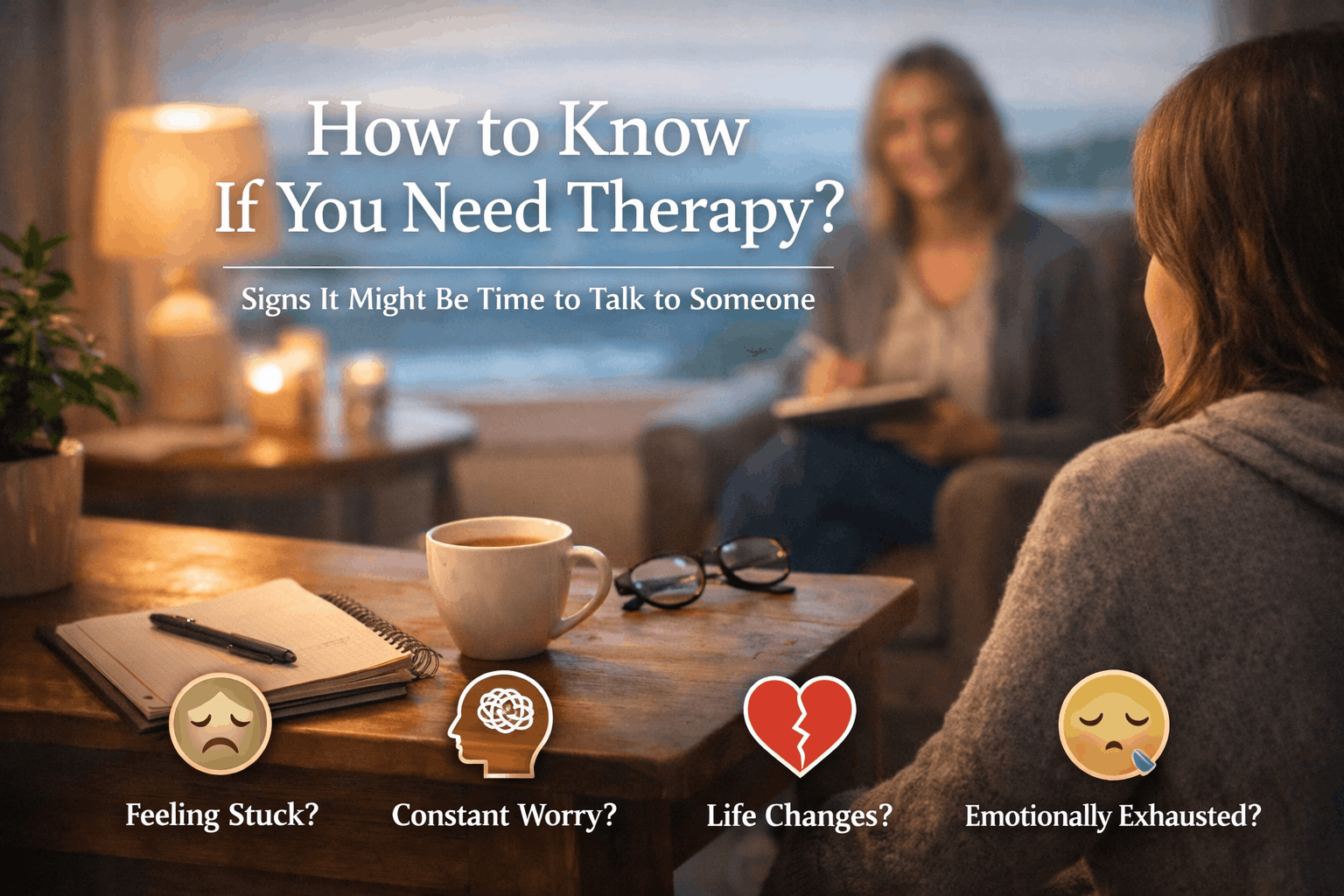
How to Know If You Might Benefit from Therapy
Signs It Could Be Time to Talk to Someone
Many people think therapy is only for when things feel completely overwhelming. But in reality, counselling can be helpful long before a crisis point.
You might not feel like your situation is “serious enough.” Perhaps you’re functioning day-to-day, going to work, seeing friends, and keeping up with life. Yet something still feels off. Maybe there’s a persistent sense of anxiety, a feeling of being stuck, or a quiet heaviness you can’t quite explain.
Therapy isn’t only about solving problems. It can also be a space for reflection, understanding yourself more deeply, and making sense of experiences that feel confusing or difficult.
If you’ve been wondering whether therapy could help you, here are some common signs that it might be worth exploring.
You Feel Stuck in the Same Patterns
One of the most common reasons people come to therapy is the feeling of being stuck.
You might notice certain patterns repeating in your life. Perhaps you find yourself overthinking situations, struggling with relationships, or feeling anxious in similar circumstances again and again.
Even when you understand the pattern intellectually, it can still be difficult to change it on your own.
Therapy can help you gently explore these patterns — where they may come from and how they affect your life now — while finding new ways of responding to them.
Anxiety or Stress Feels Constant
A certain amount of stress is a normal part of life. But when anxiety becomes a regular background presence, it can start to affect your wellbeing.
This might show up as:
-
Constant worrying or overthinking
-
Difficulty relaxing or switching off
-
Trouble sleeping
-
Feeling on edge or restless
-
Physical symptoms like tension or headaches
Many people live with anxiety for years without realising how much it’s affecting them.
Talking therapy can provide a space to understand what’s driving that anxiety and develop ways to respond to it with more self-compassion and awareness.
You Feel Overwhelmed by Life Changes
Even positive changes can bring emotional challenges.
Moving somewhere new, starting a new job, going through a breakup, becoming a parent, or finishing university can all bring uncertainty and stress.
During times of change, it’s common to feel lost or unsure about the future.
Therapy can offer a supportive space to talk things through, make sense of what you're experiencing, and reconnect with what matters to you.
You Struggle to Talk Openly with People Close to You
Friends and family can be incredibly supportive, but sometimes it can still feel difficult to share certain thoughts or feelings with them.
You might worry about being judged, burdening others, or simply not finding the right words.
A therapist provides a different kind of space — one that is confidential, non-judgemental, and focused entirely on you.
For many people, having a place where they can speak freely without needing to protect or reassure anyone else can feel deeply relieving.
You Want to Understand Yourself Better
Therapy isn’t only about solving problems.
Many people seek counselling because they’re curious about themselves. They want to understand their emotions, relationships, and experiences more clearly.
You might be wondering:
-
Why do I react this way in certain situations?
-
Why do certain relationships feel difficult?
-
Why do I struggle with confidence or self-doubt?
Therapy can help you explore these questions with curiosity rather than judgement.
Over time, this kind of self-understanding can lead to greater clarity, confidence, and emotional resilience.
You Feel Emotionally Exhausted
Sometimes people come to therapy simply because they feel tired.
Not just physically tired, but emotionally drained from holding everything together.
You might be managing work, relationships, responsibilities, and daily life while quietly feeling overwhelmed inside.
When emotions are pushed aside for long periods, they often show up as burnout, irritability, or a sense of disconnection from yourself.
Therapy can offer space to slow down and reconnect with how you’re really feeling.
You’ve Been Thinking About Therapy for a While
Often, the biggest sign that therapy might be helpful is simply that the idea keeps coming back to you.
Many people spend months or even years wondering whether they should reach out.
If therapy has been on your mind, that curiosity may be worth listening to.
Starting therapy doesn’t mean you have to commit to long-term counselling straight away. Many people begin with an initial conversation to see whether it feels like the right fit.
What Therapy Is Really Like
If you’ve never been to therapy before, it can feel a little mysterious.
In person-centred counselling, sessions are usually conversational and guided by what feels most important for you to talk about.
Rather than giving advice or telling you what to do, the therapist works alongside you — offering empathy, understanding, and a supportive space where you can explore your experiences at your own pace.
Over time, many people find that simply being heard and understood can create powerful shifts in how they see themselves and their lives.
Finding Therapy in Falmouth or Cornwall
If you’re considering therapy and live in Cornwall, finding the right therapist is an important step.
Different therapists work in different ways, so it’s often helpful to read profiles, ask questions, or have an initial conversation before deciding.
The most important factor is usually the relationship between you and the therapist. Feeling comfortable and understood can make a big difference in how helpful therapy feels.
A Final Thought
You don’t need to wait until things feel unbearable before seeking support.
Therapy can be a place to pause, reflect, and explore what’s going on beneath the surface of everyday life.
If you’re feeling stuck, overwhelmed, or simply curious about yourself, talking with a therapist might be a helpful place to begin.
Related reading
More from the blog
Need Support?
If you're ready to take the next step, we're here to help