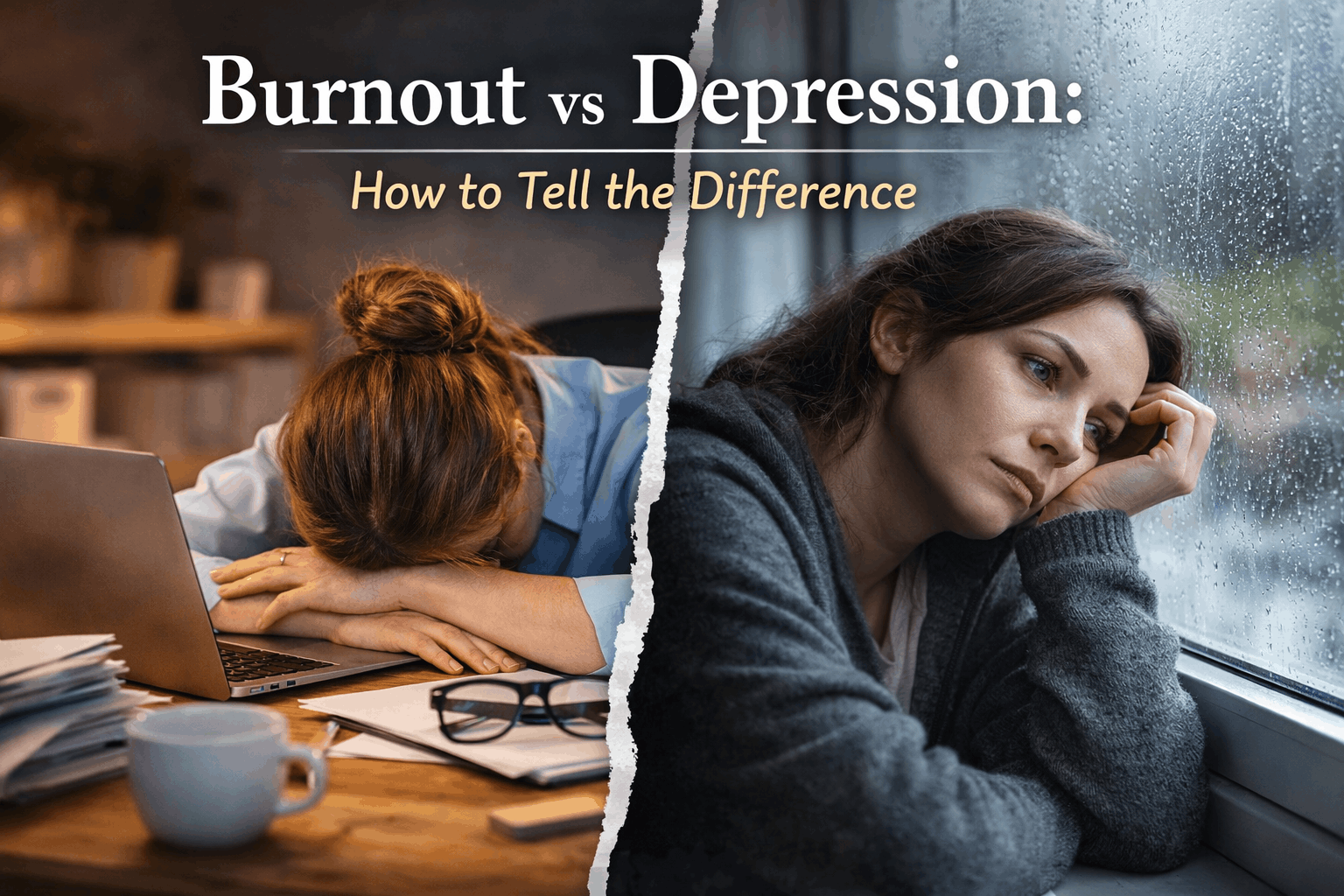
Burnout vs Depression: How to Tell the Difference (and Why It Matters)
Feeling exhausted, unmotivated, and disconnected from life can be deeply unsettling. Many people find themselves wondering: Am I burnt out, or is this something more like depression?
It’s an important question — because while burnout and depression can feel very similar, they are not the same thing. Understanding the difference can help you find the right kind of support and begin to feel like yourself again.
In this post, we’ll explore what burnout and depression are, how they overlap, how they differ, and how therapy can help you move forward.
What Is Burnout?
Burnout is often linked to chronic stress — particularly stress that feels relentless and inescapable. It’s commonly associated with work, but it can also come from caregiving, relationships, or ongoing life pressures.
Burnout tends to build gradually. You might start by feeling tired or overwhelmed, but over time it can deepen into emotional exhaustion, cynicism, and a sense of detachment.
Common signs of burnout include:
- Feeling drained, even after rest
- Struggling to feel motivated or productive
- Becoming more irritable or detached
- Losing satisfaction in things you used to care about
- Feeling like you're just “getting through the day”
Burnout often has a clear context — it’s usually tied to a specific area of life, like work or a demanding role.
What Is Depression?
Depression, on the other hand, is a mental health condition that affects how you think, feel, and experience the world more broadly.
While burnout is often situational, depression tends to be more pervasive. It can affect every area of life — your mood, sleep, appetite, relationships, and sense of self.
Common signs of depression include:
- Persistent low mood or sadness
- Loss of interest or pleasure in most activities
- Changes in sleep (too much or too little)
- Low energy or fatigue
- Feelings of worthlessness or guilt
- Difficulty concentrating
- A sense of hopelessness
Depression isn’t always caused by a single identifiable stressor. It can develop gradually or appear even when life looks “fine” on the surface.
Why They Can Feel So Similar
Burnout and depression share a lot of overlapping symptoms — especially around exhaustion, low motivation, and emotional numbness.
This is why people often confuse the two.
For example, you might feel:
- Completely drained
- Disconnected from things you used to enjoy
- Less able to cope with everyday demands
- Mentally foggy or overwhelmed
From the inside, both experiences can feel like you’re running on empty — or like something in you has “switched off.”
Key Differences Between Burnout and Depression
While there’s overlap, there are some important distinctions:
1. Scope of impact
Burnout is usually tied to a specific area (like work). Depression tends to affect everything.
2. Emotional tone
Burnout often comes with frustration, irritability, or cynicism. Depression is more associated with sadness, emptiness, or hopelessness.
3. Recovery patterns
With burnout, stepping away from the stressor (e.g. taking time off) can bring noticeable relief. With depression, symptoms often persist even when circumstances change.
4. Sense of self
Depression is more likely to involve deep self-critical thoughts or feelings of worthlessness. Burnout tends to focus more on external pressures.
That said, burnout can lead into depression if it’s left unaddressed — which is why it’s important to take it seriously.
“I Don’t Feel Like Myself Anymore”
One of the most common experiences people describe — whether it’s burnout or depression — is a sense of disconnection from themselves.
You might notice:
- You’re going through the motions rather than living
- Things that used to matter don’t feel the same
- You feel emotionally flat or distant
- You’re more withdrawn than usual
This can be unsettling, especially if you’re used to being capable, motivated, or “on top of things.”
Often, this isn’t a sign that something is wrong with you — it’s a sign that something in your life or emotional world needs attention.
How Therapy Can Help
Whether you’re experiencing burnout, depression, or something in between, therapy can offer a space to slow down and understand what’s happening beneath the surface.
In a person-centred approach, the focus isn’t on diagnosing or labelling you — but on helping you reconnect with yourself and make sense of your experience.
Therapy can help you:
1. Understand the root of what you’re feeling
Is this linked to stress, pressure, expectations, or something deeper?
2. Reconnect with your emotions
Burnout and depression can both involve emotional numbness. Therapy gently helps you feel again — at your own pace.
3. Reduce overwhelm
Having a space where you don’t have to “hold it all together” can be incredibly relieving.
4. Rebuild a sense of direction
When you feel lost or stuck, therapy can help you rediscover what matters to you.
5. Develop sustainable ways of coping
Rather than quick fixes, therapy supports longer-term change and self-understanding.
When to Reach Out
It can be hard to know when to seek support — especially if you’re used to coping on your own.
You might consider reaching out if:
- You’ve been feeling this way for a few weeks or more
- It’s affecting your work, relationships, or daily life
- You feel stuck or unsure how to move forward
- You’re constantly exhausted or overwhelmed
- You don’t feel like yourself anymore
You don’t have to wait until things feel “really bad” — therapy can be helpful at any stage.
A Final Thought
Burnout and depression can both leave you feeling drained, disconnected, and unsure of what’s going on.
But these experiences don’t define you — and they don’t have to be permanent.
With the right support, it’s possible to regain a sense of energy, clarity, and connection to yourself.
If you’re based in Falmouth or Cornwall and thinking about starting therapy, you’re very welcome to get in touch. I offer a free initial call so you can ask questions and see if it feels like the right fit — with no pressure.
Related reading
More from the blog
Need Support?
If you're ready to take the next step, we're here to help